














































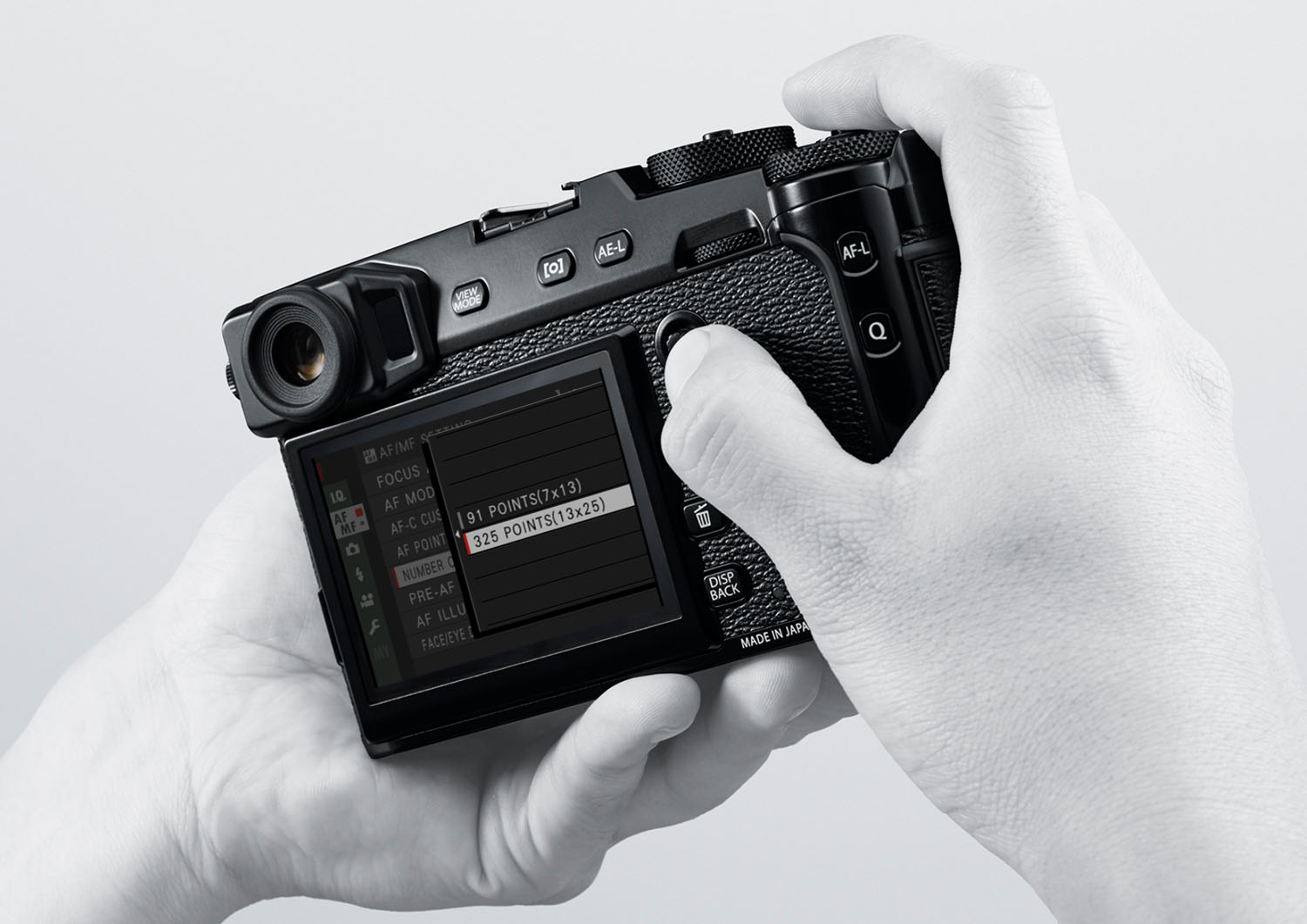
Evolution of autofocus for X-T2 and X-Pro2 Ver.2.00
We will talk a little more on the evolution of autofocus for X-T2 and X-Pro2 Ver.2.00 by comparing it to the AF performance of X-Pro2 Ver.1.00.
First, there are more AF points. Take a look at the screenshot below. You will notice that there are two additional lines of AF points at both right and left end of the display.
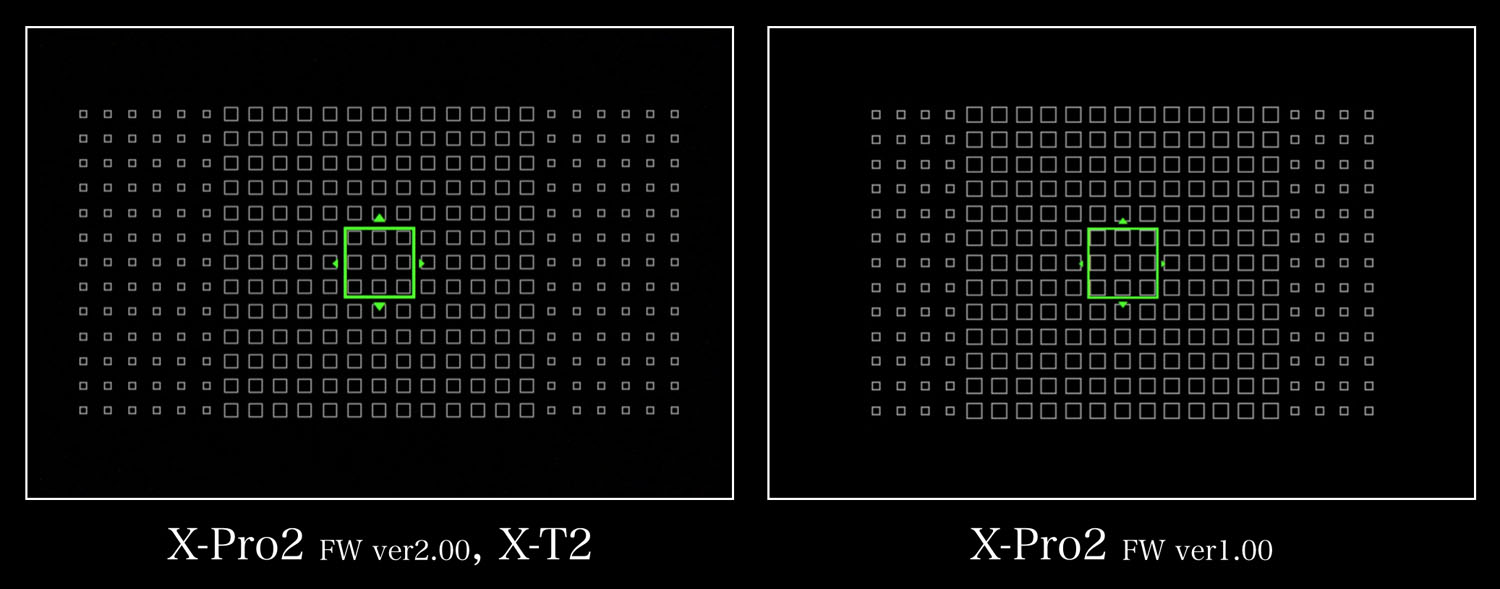
The number of AF points for the phase detection pixels remains the same. They are for the contrast AF, but with the 384fps readout capability of X-Trans CMOS III, the fast processing power of X-Processor Pro, and the newly designed lens range will make the contrast AF fast enough that we are certain you will see the difference.
This will especially be valuable if your style of photograph is to have the camera on a tripod and compose your picture carefully before deciding on the focus point.

These only affects AF performance of the single shot. With X-T2 and X-Pro2 Ver.2.00, you will also see the improvement in continuous shooting.
We have had feedback such that “the X Series camera tend to lose focus in continuous shooting”. Upon examination, we learned that most of the first shot is in focus, but the shots after the first one tend to miss focus in many cases.
The AF is accurate for the first shot, as it can pre-focus before the shutter is released. But the shots after the first shot have to conduct the AF search in a very short interval. Hence the accuracy was never as good as the first shot.
The problem on top of it is that AF search is critical for those shots that need to be taken in continuous shooting.
It really is the ultimate photography, if you can have your best shot in a single shot, but the chances are that you will need to shoot multiples to get to the best shot. Hence, it is the duty of the X Series to allow the photographers to shoot multiple frames to achieve the best shot.
So the new technology has been developed to allow increased number of AF search between the frames. There used to be only one AF search between the frames, but this is now increased up to 10. This will allow better tracking on the moving subject between the frames.

There were two technological advancement.
First, the live view now has extended period of display in continuous shooting. The fast response of X-Trans CMOS III and X-Processor Pro made this advancement possible. longer live-view means that AF search can be conducted for longer period of time.
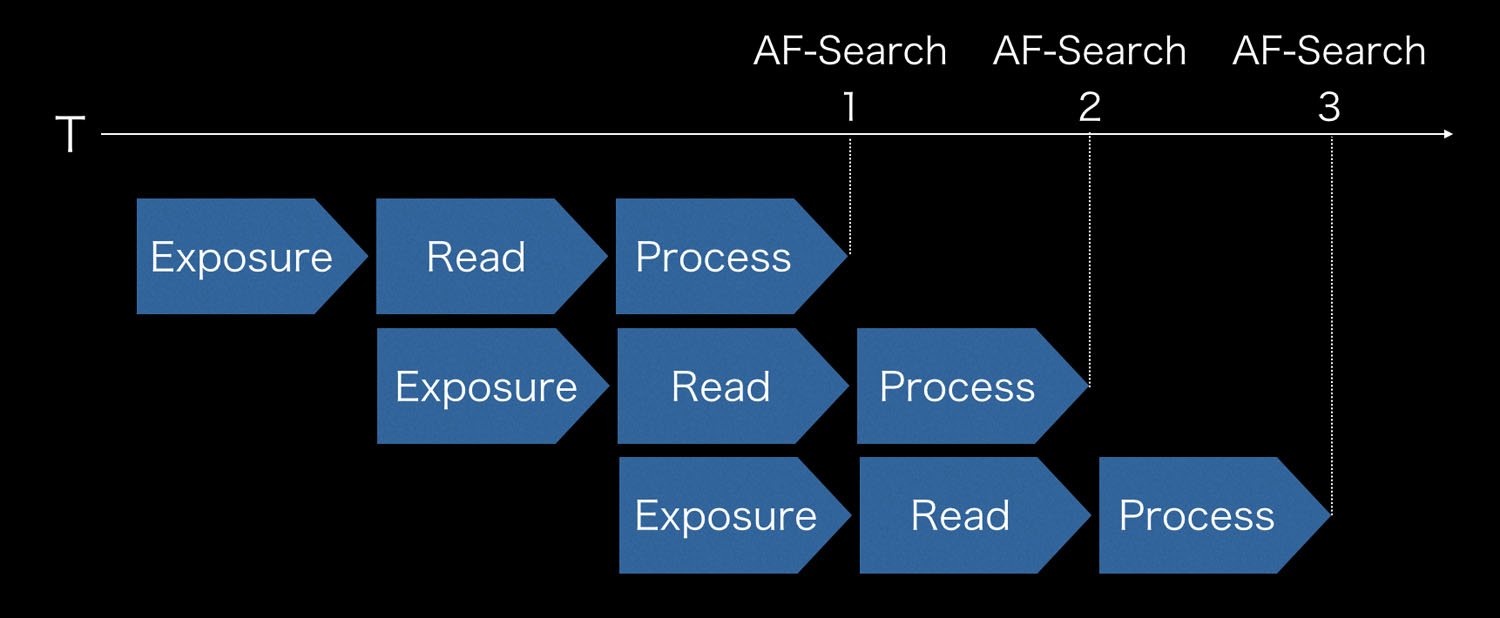
Secondly, the AF search can now be processed in parallel. The breakdown of AF search is “Exposure”, “Read”, and then “Process”. The new algorithm allows so that each step can be conducted simultaneously. It means that while the first AF search is being “processed”, the second AF search starts to “read”, and the third AF search starts the “exposure”. By doing so, multiple AF search is now possible in the short interval.
The result is tremendous. Those X-Photographers that used to say “We only use single frames to avoid unneeded frames” now say that “Continuous shooting is the norm for sports photography” after testing out the new X-T2. The camera will be available in September. The FW Ver. 2.00 for X-Pro2 will be available in October. You will be able to experience what the X-Photographers experienced very soon.